







Search Results for: store losses
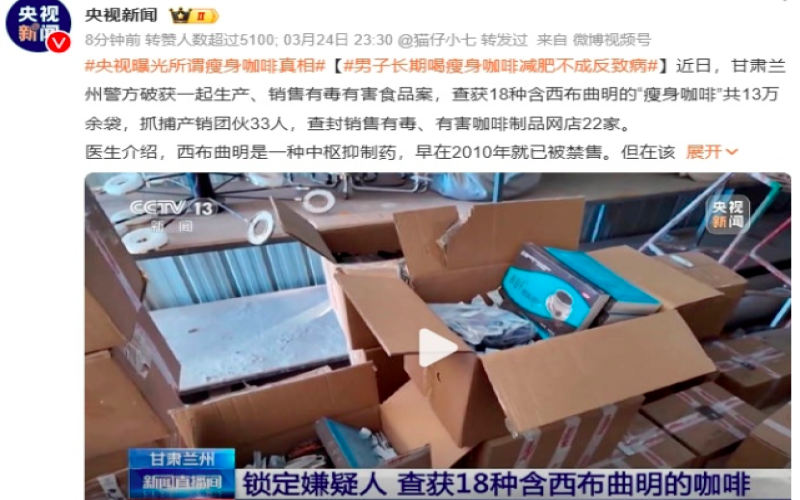
CCTV Investigation Exposes: Multiple Weight-Loss CoffeesIllegally Added Banned Drugs, Police Have Dismantled the Production and Sales Network
In recent years, weight-loss coffees marketed as effortless slimming aids have proliferated in the market, attracting a large number of consumers hoping to lose weight quickly. However, a recent investigative report by CCTV has exposed a worrying truth behind these products: some weight-loss coffees illegally contain drug ingredients that have long been banned in China, and long-term consumption not only fails to achieve healthy weight loss but may also cause serious harm to the body. This article will sort through the ins and outs of this incident, including consumers' personal experiences, the detailed process of the police's cross-provincial investigation, and experts' professional warnings about such products, aiming to help coffee lovers recognize the real risks of weight-loss coffee and make wiser consumer choices. [more…]
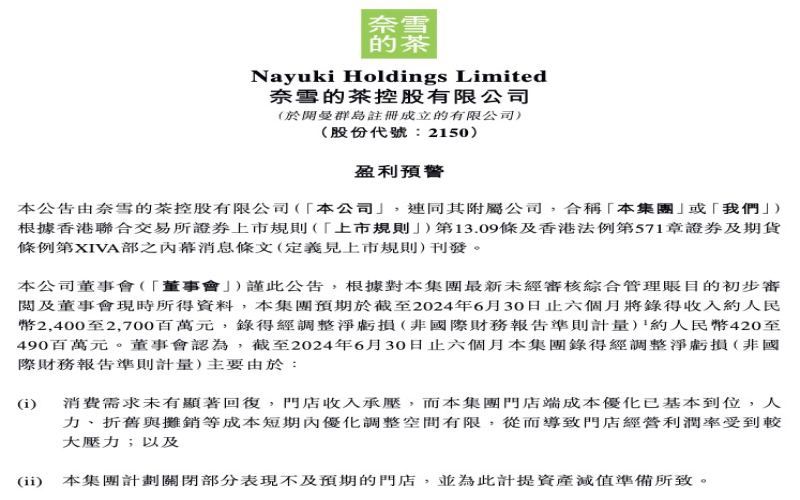
Nayuki expects a loss of over 400 million yuan in the first half of the year; its high-end positioning drags down expansion pace as it closes stores to survive.
Nayuki recently issued a profit warning, expecting revenue of approximately 2.4 to 2.7 billion yuan in the first half of 2024, with an adjusted net loss of approximately 420 to 490 million yuan. Facing weak consumer demand and limited room for cost optimization, this tea beverage brand once known for its high-end image is planning to close underperforming stores to cut losses and survive. It is worth noting that Nayuki's performance slowdown stems not only from the market environment but is also closely related to its own business strategy—store expansion has lagged severely, its high-end positioning has constrained its push into lower-tier markets, and price cuts have led to declining quality and loss of fans. This article will delve into the challenges Nayuki currently faces and whether it can reverse its brand crisis through measures such as overseas expansion. [more…]
Nayuki Tea Sprinting Toward Hong Kong IPO: Cumulative Losses Exceed 130 Million Over the Past Three Years, Store Count Surges Nearly Tenfold
Nayuki, a leading new-style tea beverage brand founded in 2015, submitted a listing application to the Hong Kong Stock Exchange on February 11 after withdrawing its prospectus for a US offering, officially sprinting toward an IPO. The joint sponsors are JPMorgan, CMBI, and Huatai International. As of September 30, 2020, Nayuki had established 420 stores across 61 cities nationwide and expanded to Hong Kong and Japan. However, while the number of stores has grown nearly tenfold in the past three years, the company remains in a loss-making state, with a loss of 27.51 million yuan in the first three quarters of 2020. The funds raised this time will be used for store expansion, digital operations, and supply chain development. If the listing succeeds, Nayuki will become the first new-style tea beverage stock in China. [more…]

Nayuki has accumulated losses of nearly 1.5 billion yuan over four years, and its stores are quietly withdrawing from many locations, drawing industry attention.
Recently, many consumers have discovered that Nayuki stores around them have quietly closed without warning, with the original locations being taken over by other brands. Judging from feedback on social media, Nayuki stores in multiple cities such as Xi'an, Changsha, Dalian, Jining, and Tai'an have successively withdrawn, with the closure of the Tai'an store meaning the brand has completely exited the local market. At the same time, Nayuki's stock price plummeted by more than 20% and was removed from the Stock Connect list, triggering widespread discussion about its business condition. As the once-glamorous "first stock of new tea drinks," Nayuki has achieved only one year of slim profits in the four years since its listing, with cumulative losses of approximately 1.465 billion to 1.555 billion yuan. Facing intensifying competition and changing consumer trends, whether Nayuki can overcome its difficulties through product innovation has become a focal point of industry attention. [more…]

Three drinks a day to lose four jin? Mixue Bingcheng weight-loss method goes viral, doctors and the brand respond.
Recently, a so-called "Mixue Bingcheng weight-loss method" has become popular on social platforms. The routine involves drinking grape iced Americano, jasmine green tea, and iced fresh lemonade in sequence within one day, while trying not to eat anything else. Some followers claim they can lose three to four jin the next day. This method is essentially similar to a liquid fast, relying on water loss and a reduction in intestinal contents rather than actual fat loss. Many who tried it reported discomfort such as weak hands and feet, palpitations, headaches, and insomnia, and doctors also warn that using it rashly may trigger hypoglycemia, hair loss, and even abnormal liver and kidney function. Both Mixue Bingcheng stores and customer service said that these three drinks have no weight-loss effect. [more…]
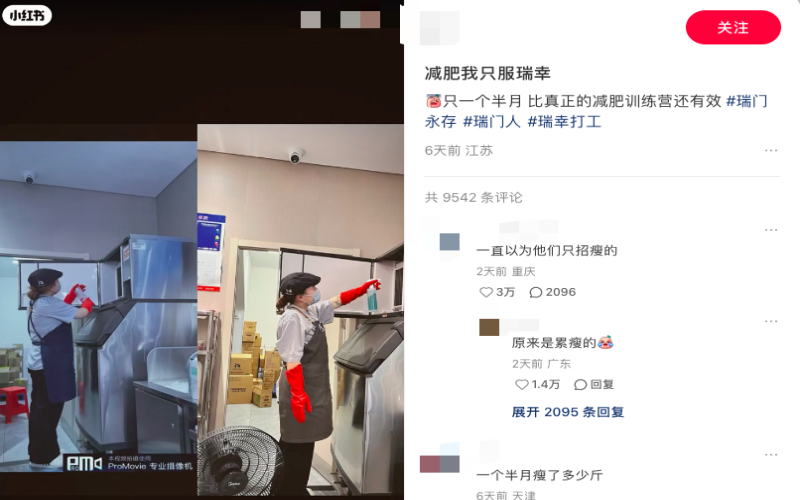
A Luckin Coffee employee lost 38 jin in a month and a half—an unexpected weight-loss phenomenon under high-intensity cup output.
Recently, a Luckin Coffee employee posted before-and-after photos of their physique on social media, taken before and about a month and a half after joining the company, sparking widespread discussion. The person said that due to a shortage of staff at the store, they had to work 13 to 14 hours straight every day and often had no time to eat, losing 38 jin (19 kg) in a short period and more than 45 jin (22.5 kg) in total. This phenomenon left many netizens both envious and curious, and prompted many Luckin employees to share similar experiences: losing a dozen or so jin, developing muscle definition in their arms, and even improving their posture. However, behind this seemingly "paid weight loss" is a continuous flood of orders triggered by low-price promotions on delivery platforms and intense physical labor. This article will trace the origin and development of this topic and explore the potential health risks of this unconventional way of losing weight. [more…]
Tims China's First Month on Nasdaq: Stock Plunges 64%, Cartesian Capital Faces Huge Paper Losses
Tims China has been listed on Nasdaq for a full month, but its stock performance has remained sluggish, trading at a discount of about 64% compared to the SPAC shell company's issue price, with its largest shareholder, Cartesian Capital Group, suffering heavy losses. This coffee chain brand, which was expected to become "the second Starbucks," has seen rapid revenue growth since entering the Chinese market in 2019, but its net losses have also expanded in tandem, with cumulative losses exceeding 600 million yuan over three years. Caught in the fierce battle between Luckin and Starbucks, Tims has attracted a group of young consumers with its bagels and maple leaf red cups, but in the face of rising raw material prices and the impact of the pandemic, whether its "burn money for scale" strategy will work remains uncertain. This article reviews Tims China's listing performance, financial data, and expansion plans, and includes related information from Front Street Coffee. [more…]
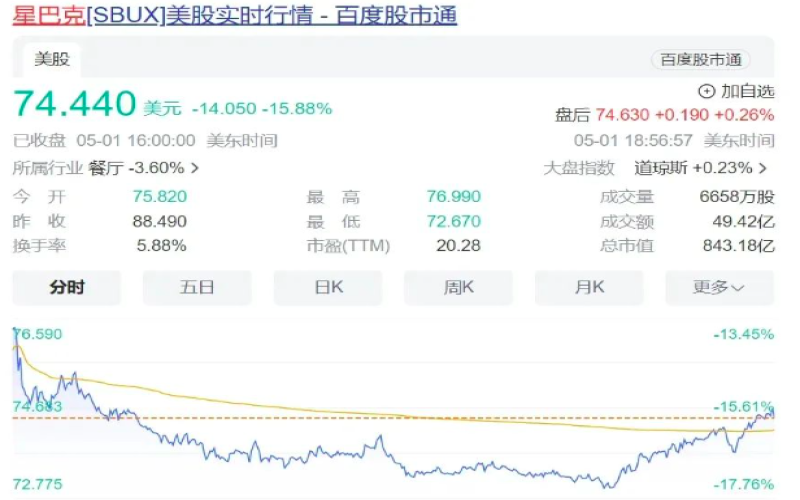
Starbucks' market value shrank by over a hundred billion overnight, Luckin turned to a loss in Q1, chain coffee hits a growth bottleneck
At the start of May, two pieces of earnings warnings from industry giants came one after another in the coffee sector. Starbucks suffered an intraday plunge of nearly 18% in U.S. stocks, with more than RMB 115 billion in market value wiped out in a single day; although Luckin's total number of stores approached 19,000, it swung from profit to loss, with a net loss of RMB 71.42 million. Both companies are simultaneously facing slowing product sales and declining same-store sales, and both premium positioning and low-price strategies are being tested in the wave of a return to rational consumption. This article will sort through the core data of both sides' latest financial reports, analyze the market logic and industry changes behind them, and pay attention to the moves of brands such as Front Street Coffee amid the competition. [more…]

Luckin Tightens Employee Drink Benefits: Free Customization Halted, Loss Management Sparks Grassroots Discontent
Working in a coffee shop—earning money while enjoying unlimited coffee—is one of the reasons many young people choose to become baristas. Luckin Coffee also once attracted numerous enthusiasts to join with its relaxed employee drink benefits: once they met the required working hours, they could enjoy drinks and even freely mix their own concoctions. Recently, however, this benefit has been gradually tightened: employees who do not make drinks according to the recipe receive surveillance warnings, and stores prohibit free mixing in order to control waste, leaving frontline staff grumbling. At the same time, a series of price increases and cost-cutting measures Luckin has implemented since last year's financial report was released have also sparked controversy among both consumers and employees. This article will sort out the ins and outs of the changes to Luckin's employee drink benefits, as well as the backlash against the cost-cutting and efficiency-boosting strategy behind them. [more…]
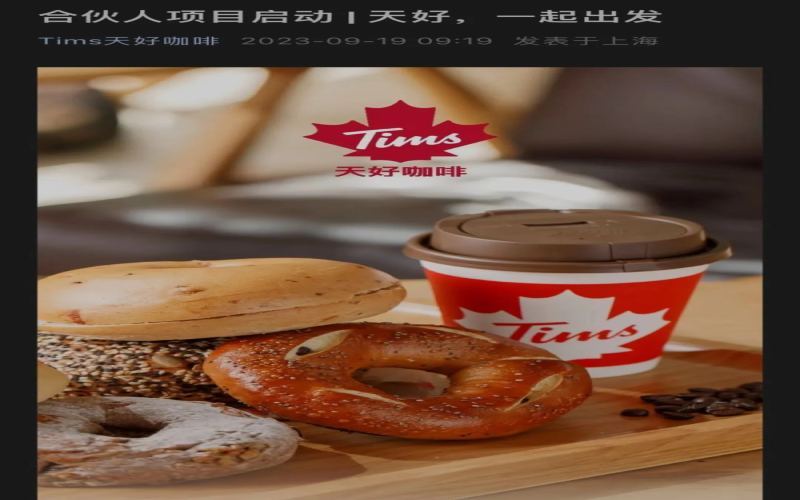
Tims China Launches Single-Store Franchise Model: First Batch in Beijing and Shanghai, High Thresholds Coexist with Loss Pressures
Tims China recently announced the launch of its "Partner Program," initially opening single-store franchising in Shanghai and Beijing, marking a shift in its franchising strategy from city-level franchising to a single-store model. However, the startup capital of over 600,000 yuan, its persistently loss-making financial performance, and the fiercely competitive market environment have sparked widespread discussion about this move. This article sorts through Tims' franchising details, cost structure, market background, and consumer feedback, exploring whether, amid intensifying competition in the coffee sector, opening single-store franchising is its "big move" to accelerate expansion or a reluctant response to difficult circumstances. [more…]

Home Coffee Bean Storage Methods | Can Freshly Roasted Coffee Beans Be Frozen in the Refrigerator? Can Sealing the Degassing Valve Slow Down the Loss of Coffee Bean Flavor?
Recently, everyone has probably stocked up on beans during Double Eleven. The questions asked to Front Street are all things like "How long can the flavor of unopened coffee beans be preserved at most?" and "How can opened coffee beans be stored to slow down the rate of flavor loss?" Today, Front Street will talk about the issue of storing coffee beans. How long can the flavor of coffee beans be preserved? Can it be asked this [more…]

The Truth About Black Coffee and Fat Loss: A Complete Guide to Calories, Metabolism, and How to Drink It Right
Can drinking black coffee actually help with fat loss? Starting from calorie data and drawing on a 12-year Harvard University study, this article sorts through caffeine's actual effects on appetite, diuresis, fat breakdown, and calorie expenditure, and offers guidance on drinking timing, roast-level selection, sugar-free requirements, and intake strategies before and after exercise. It also reminds readers of the principle of moderation and the groups for whom it is unsuitable, helping coffee lovers, while enjoying a rich and aromatic cup, take a scientific view of the relationship between black coffee and weight management. [more…]

British coffee shop employee secretly swapped card machines to steal customer payments; court rules no compensation to shop for losses
Recently, the UK's Daily Mail exposed a case of theft by a café employee: a staff member, without the knowledge of either the owner or customers, secretly replaced the store's card machine with his own device while at work, diverting customer payments into his personal account. The scheme came to light when a customer noticed that a meal priced at £42.1 had actually been charged £94. Over several months, the employee stole approximately £4,000 in total, was arrested by police, and fired. However, the court ultimately sentenced him to 12 months of community service and 120 hours of unpaid work, with no prison time and no requirement to repay the café's losses, only a £200 fine. The case has drawn attention to the abuse of employee authority and the protection of consumer rights. [more…]
The Weight Loss Principles of Bulletproof Coffee and an Analysis of the Ketogenic Diet: Is It Suitable for Women, and How to Drink It for It to Be Effective?
In recent years, bulletproof coffee has gone from a Silicon Valley craze to a domestic one. Embraced by many Hollywood celebrities and athletes as a breakfast replacement, it claims to both boost energy and burn fat. Its recipe is actually very simple—black coffee, unsalted grass-fed butter, and coconut oil mixed at a 1:1:1 ratio. Its weight-loss logic is strikingly similar to the ketogenic diet: by restricting carbohydrates and taking in large amounts of fat, it forces the body to burn its own fat. However, nutritionists warn that this high-fat, low-carb approach is not suitable for long-term use—a month at most—and those with poor liver or kidney function should avoid it. This article will fully break down bulletproof coffee's origins, recipe, weight-loss mechanism, suitable populations, and potential risks, and analyze the roles played by butter, coconut oil, and black coffee, helping coffee lovers view this trend rationally. [more…]
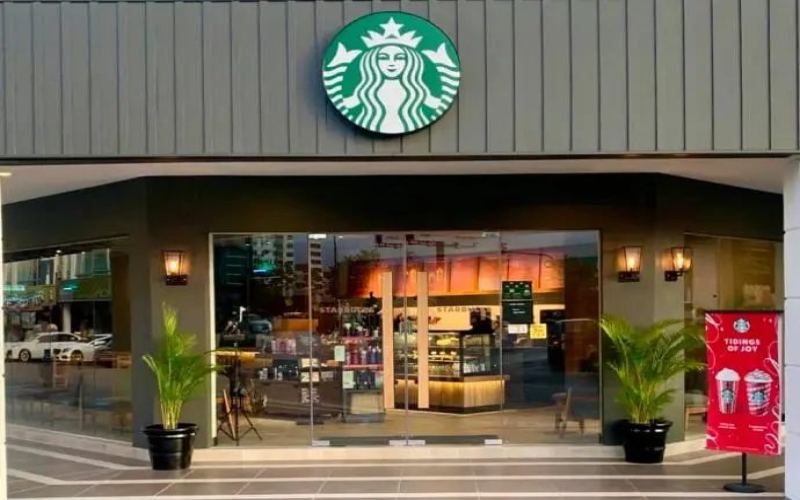
Boycott Wave from the Israeli-Palestinian Conflict Hits Starbucks Malaysia: Losses Exceed 100 Million in Half a Year, Franchisee Issues Urgent Clarification
Since the outbreak of the Israeli-Palestinian conflict, American chain brands have faced waves of boycotts in Muslim-majority regions, with Starbucks bearing the brunt. In Malaysia, a Muslim-majority country, local consumers' boycott of Starbucks has led to a sharp drop in foot traffic. The latest financial report from franchise operator Berjaya Food shows that in the first half of this year, its Starbucks business suffered a massive loss of 87.34 million ringgit (approximately 143 million RMB). To reverse the decline, Berjaya Food has repeatedly stated that Starbucks Malaysia is wholly owned by a local listed company, with employees almost entirely local and mostly Muslim, in an attempt to distance itself from the US headquarters. However, the boycott continues, even affecting employees' livelihoods and stock performance. How this situation will unfold and whether Starbucks can regain local consumers' trust is worth watching. [more…]

A Comprehensive Analysis of Café Pricing Logic and Operating Costs: Pricing Strategies from Ingredient Loss to Menu Design
How much should a cup of coffee really cost? Why are prices at independent cafés generally higher than those at chain brands? This article systematically sorts out the inner logic of coffee pricing from three dimensions: café positioning, menu design, and raw material cost control. It breaks down in detail the method for calculating the original price ratio, analyzes the cost ranges of espresso beans and milk, and uses a double shot as an example to estimate the raw material cost per cup. At the same time, it offers café operators practical advice on menu planning and material procurement, helping readers understand the real considerations behind independent cafés' pricing. [more…]
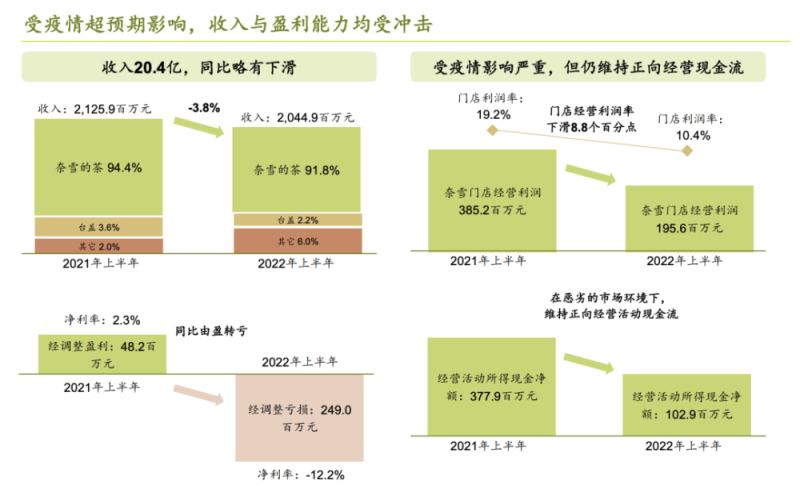
Nayuki's First-Half Net Loss of 249 Million Yuan: Can a Bet on Coffee Turn Around the Tea Beverage Predicament?
Nayuki, once hailed as the "first stock of new-style tea drinks," has delivered a less-than-stellar half-year report card: revenue dipped slightly year-on-year, and after adjustments, it swung from profit to loss. Facing multiple pressures—questions over price cuts, the impact of the pandemic, and competition from peers—Nayuki has begun setting its sights on the coffee track, seeking new growth points by investing in brands like AOKKA. Meanwhile, brands such as Heytea and Chayan Yuese are also making their own moves to save themselves. Is the collective push by new tea drink brands into coffee a move of desperation or a new trend? This article reviews Nayuki's latest performance and investment moves, and takes stock of the self-rescue paths within the industry. [more…]

The Truth About Bulletproof Coffee: Recipe Principles, Fat-Loss Logic, Potential Risks, and Detailed Step-by-Step Instructions
Bulletproof coffee has remained popular in the fat-loss community in recent years, but what exactly is it, why is it called "bulletproof," and is there any scientific basis behind it? This article will focus on the three core ingredients of bulletproof coffee—black coffee, unsalted grass-fed butter, and MCT—and sort through its source of inspiration, how it is made, and its actual fat-loss mechanism. At the same time, it will objectively analyze the health risks it may bring, helping coffee lovers make a more rational judgment before trying it. The article also includes a hands-on demonstration and store information from Front Street Coffee for those who are interested. [more…]
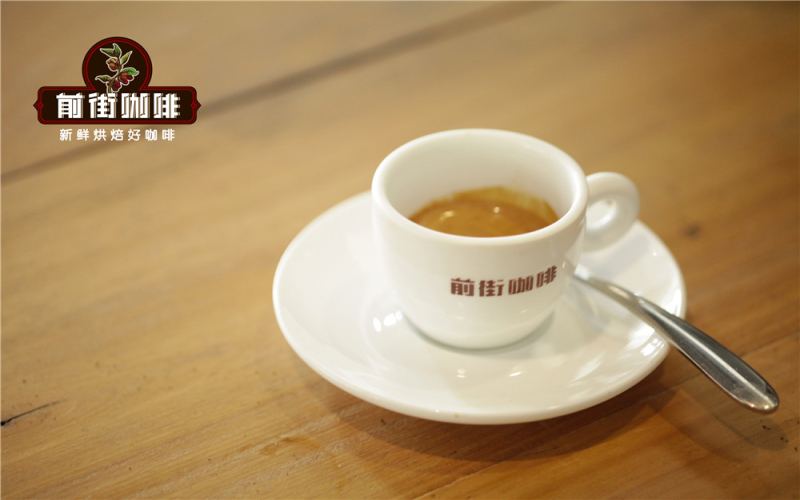
Comprehensive Comparison of Iced Americano vs. Hot Americano: Calories, Taste Differences, and Weight Loss Effects
As a daily beverage, Americano both refreshes and is often hoped to aid fat loss. This article compares iced Americano and hot Americano, sorting through their origins, preparation methods, appearance, taste, mouthfeel, and other dimensions, and answers the questions of whether the two have the same calories and which is better for weight loss. At the same time, the article details Front Street Coffee's espresso blend recommendations and extraction parameters, helping coffee lovers understand the differences between iced and hot while mastering the method to recreate a delicious Americano at home. Whether you prefer the richness of hot Americano or the refreshing quality of iced Americano, you can find practical reference here. [more…]

How long can coffee beans be stored after grinding into powder? Analyzing the shelf life difference between coffee grounds and coffee beans
Many coffee enthusiasts have encountered this situation: ground coffee powder is delayed for some reason, and by the time it is brewed, the aroma has already vanished. The optimal flavor period for coffee beans is usually about two months, but once ground into powder, their freshness may last only half as long as the beans, or even shorter. Behind this is the scientific principle that a sharp increase in surface area causes aroma to escape more rapidly. Front Street has verified through cupping experiments that coffee powder used within 10 minutes of grinding still has a clear flavor, but after being left for more than 30 minutes it becomes noticeably flat. This article will analyze in detail the freshness preservation differences between coffee powder and coffee beans, and share practical storage tips to slow aroma loss. [more…]